
A Local Heroine: Eunice Newton Oviatt
And the Oviatt Family of Braceville, OH
Eunice Newton Oviatt was born in 1777 in Connecticut, at a time when America itself was still young and uncertain. She could not have known then that her life would one day intertwine with the earliest chapters of Ohio’s history—or that her courage would help save lives on the western frontier.
Eunice married Captain Heman Oviatt, a man whose ambitions matched the promise of the expanding nation. Together, they left Connecticut and traveled west to the newly explored settlement of Hudson, Ohio. There, Heman quickly became a pillar of the community. He served as Hudson’s first mayor and helped found both the Hudson Congregational Church and Western Reserve College, known today as Case Western Reserve University. (The Oviatt’s role in aiding freedom-seeking enslaved people is remarkable in its own right—but that is a story for another day.)
This story belongs to Eunice:
Heman Oviatt operated the first store in the area, a hub where settlers and Native Americans alike came to trade. Through this connection, Eunice developed genuine friendships with the local tribes. Unlike most settlers, she took the time to learn their languages—Delaware, Chippewa, and Seneca—an extraordinary accomplishment for a woman on the early frontier.
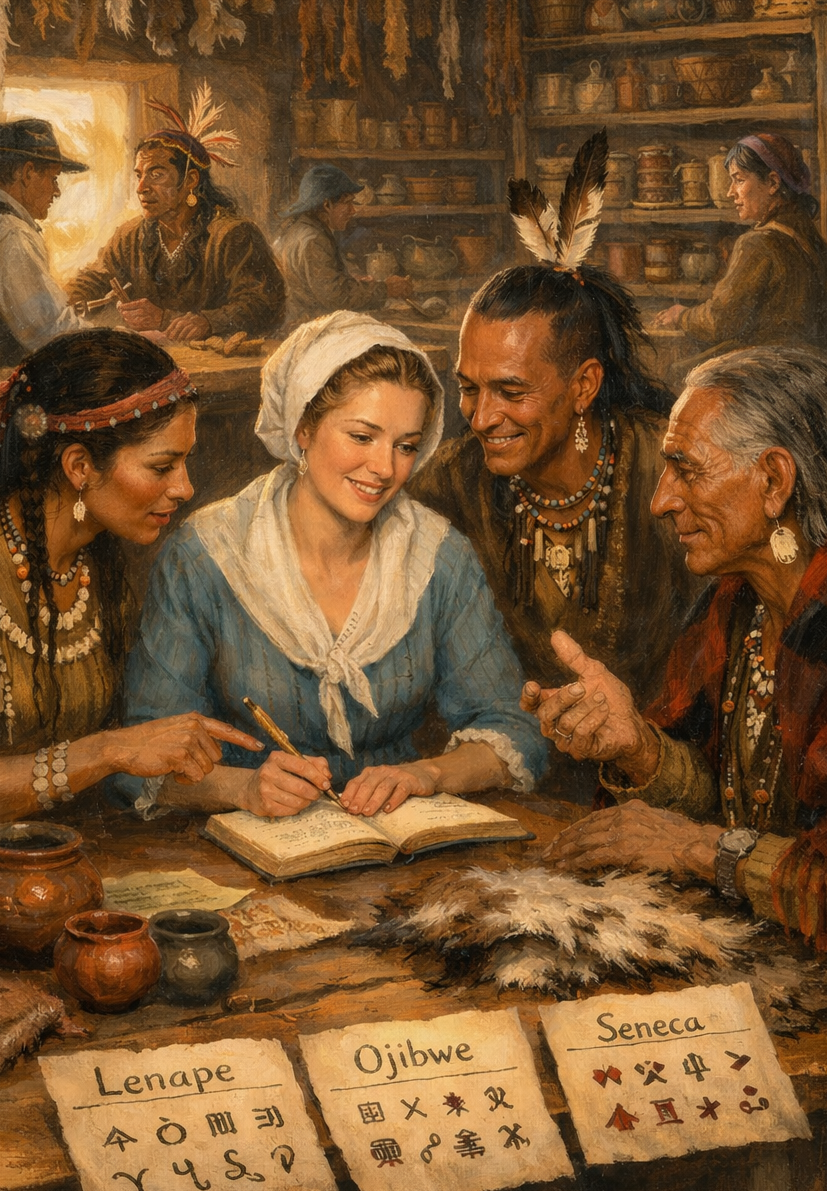
Becoming a Friend to the Natives
She learns their languages.
Her knowledge would soon prove lifesaving.
When Eunice learned that three Native American men were on trial for their lives in Warren, Ohio, she also learned something far more troubling: no one in Warren could understand them. Without an interpreter, the men had no voice, no way to explain the circumstances that had led to their arrest.
Eunice did not hesitate.
She mounted her horse and rode thirty-six miles from Hudson to Warren—alone, through rough terrain—to serve as their interpreter. In the courtroom, she carefully translated their words for the judge, ensuring their side of the story was finally heard. Because of her courage and determination, the men were freed.
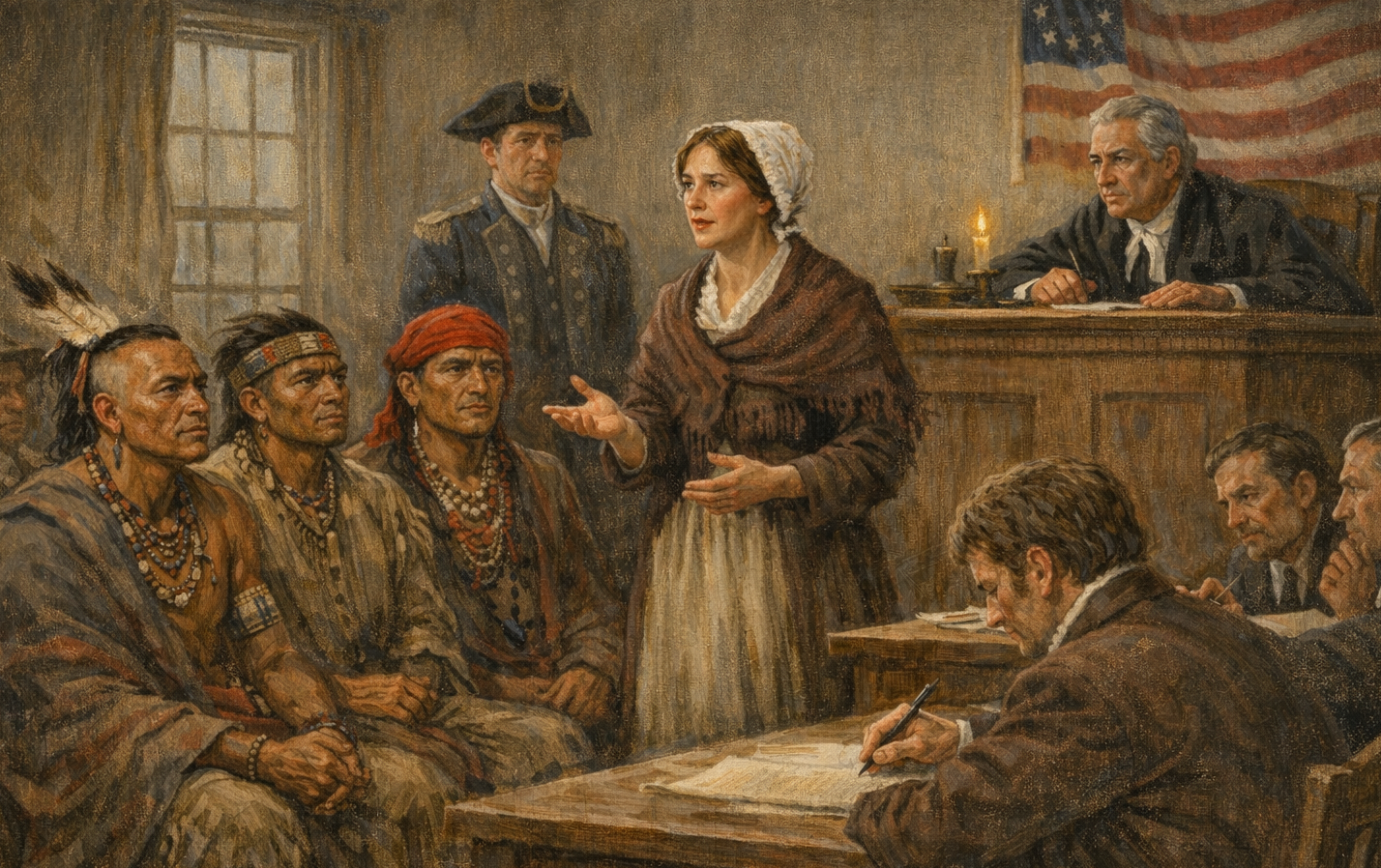
The Interpreter
The story did not end there.
Sometime later, one of the men she had helped traveled to Hudson to see her again. By then, Eunice was in poor health. Seeing her weakened state, the man was said to be so moved that tears ran down his face. Two days later, he returned bearing a gift: cranberries, a traditional remedy. Eunice recovered soon afterward, and many believed the gift—and the gratitude behind it—played a role in restoring her health.
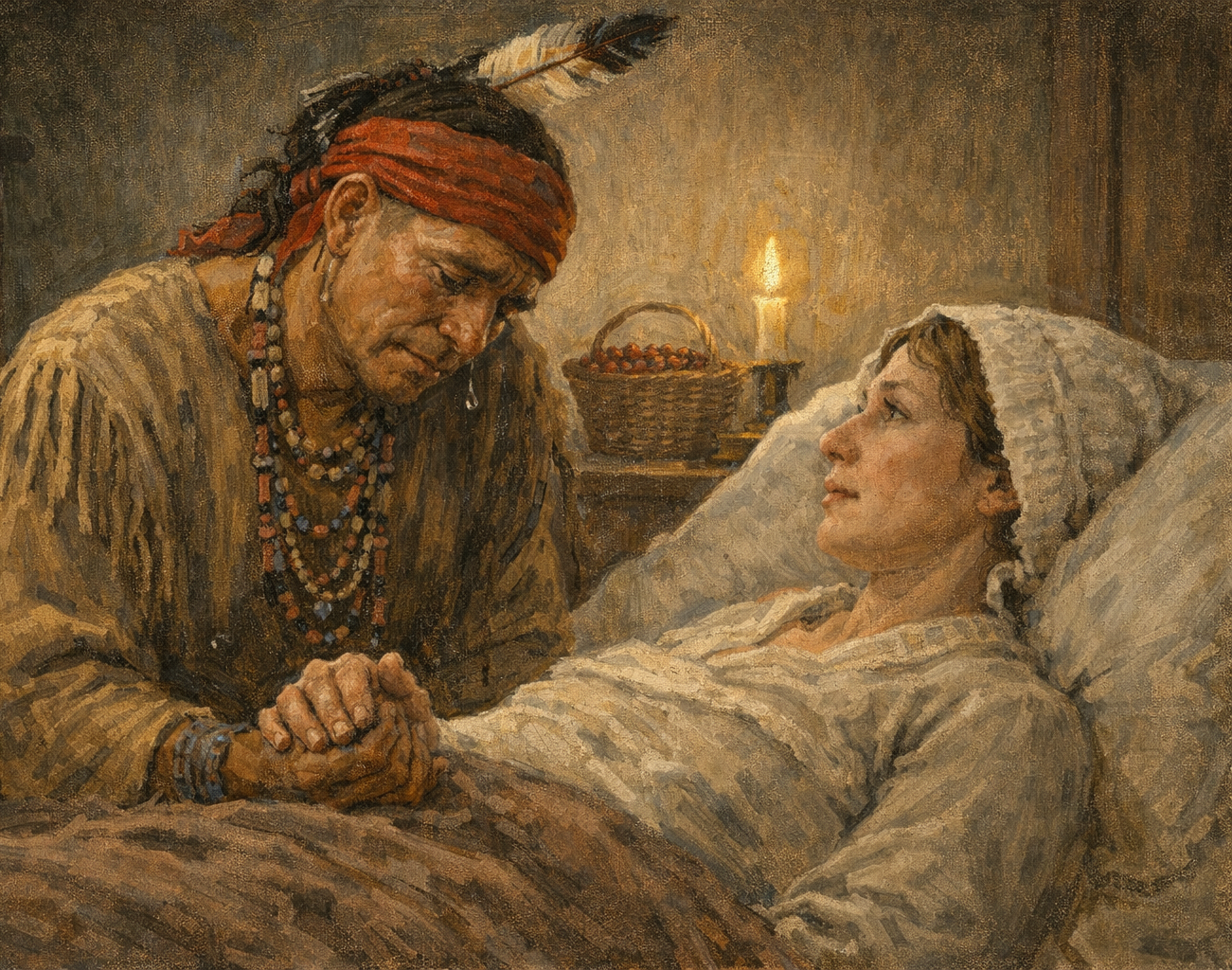
Indian Gratitude
Eunice Newton Oviatt’s story is one of compassion, bravery, and quiet heroism. In a time when few women traveled alone—let alone intervened in matters of life and death—she chose to act. Because of her, justice was served, lives were spared, and a legacy of courage was passed down through generations.
Eunice died in 1813 and is buried in the Old Hudson Cemetery
The Oviatt’s in Braceville . . .
The Oviatt legacy did not stop in Hudson. Members of the family were among the earliest settlers of Braceville, Ohio, and other towns throughout the Western Reserve. In 1811–1812, the first schoolhouse in Braceville was built—a simple log structure in the center of town that welcomed students of all ages. Heman’s nephew, Salmon Oviatt, was chosen as the school’s first teacher, continuing the family’s commitment to education and community.
Generations later, the influence of the Oviatt family could still be felt. In the early 1900s, Braceville students attended school alongside the daughters of Henry and Phoebe in nearby Leavittsburg. Their shared school, the Braceville-Ledge School, stood along what is now Kale-Adams Road at the border between Braceville and Leavittsburg—a quiet reminder of how deeply intertwined these families and communities had become.
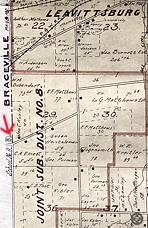
The Red Arrow points to the Braceville Ledge School
This map is from the early 1900s.
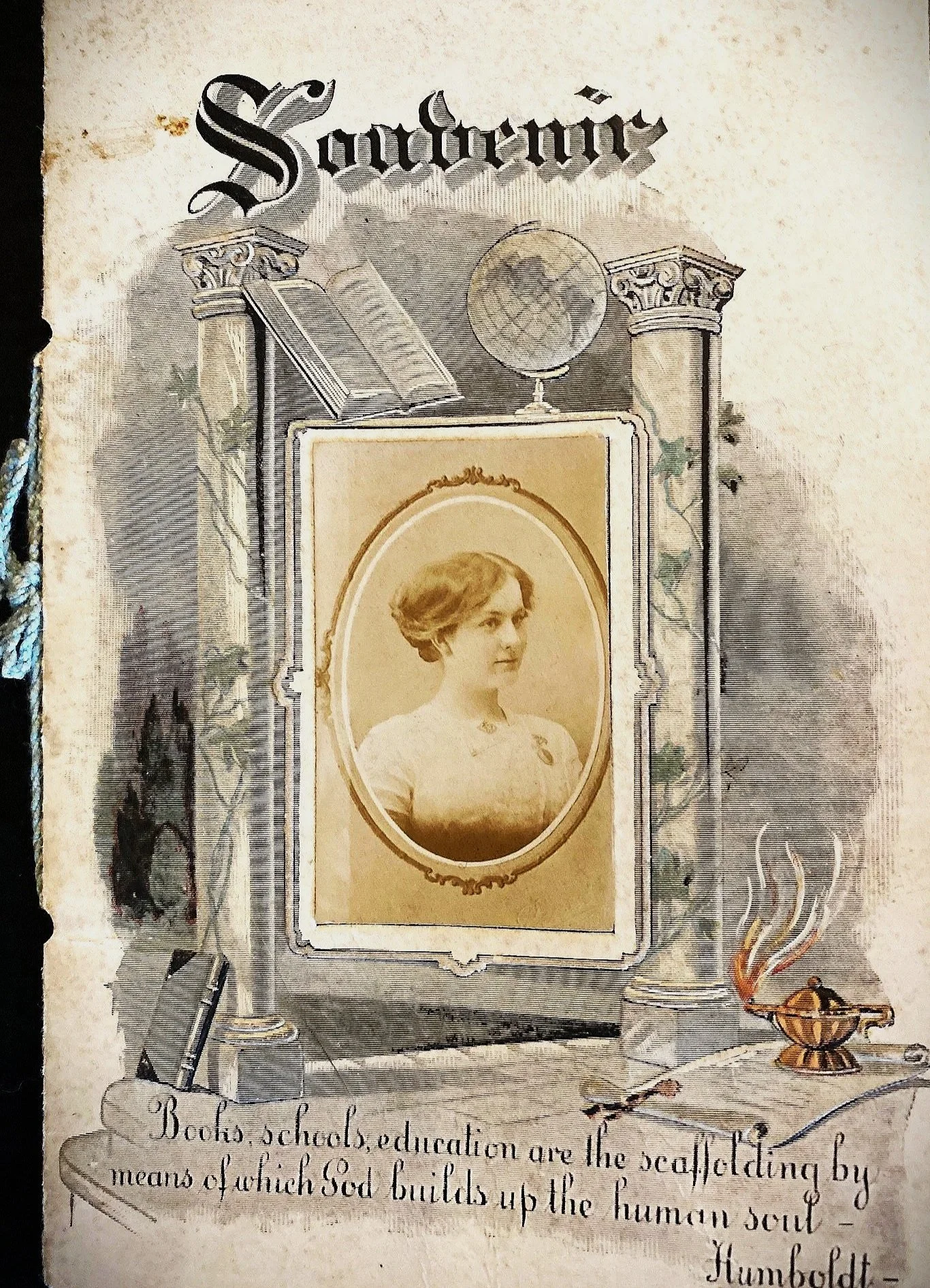
Cover of the Souvenir
from Braceville Ledge School
1912-13
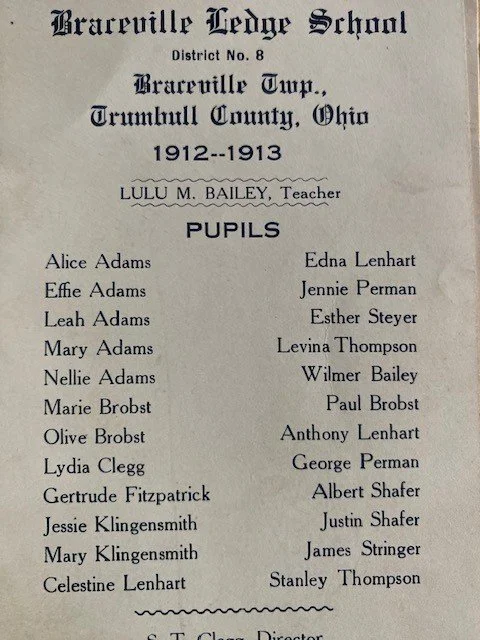
Henry and Phoebe’s Daughters:
Jessie Klingensmith & Mary Klingensmith were among the pupils.